Carder — NFC Business Card Platform
Multi-tenant SaaS for NFC business cards: per-client customised pages, 20+ link types, badge system, installable PWA, and cookieless analytics.
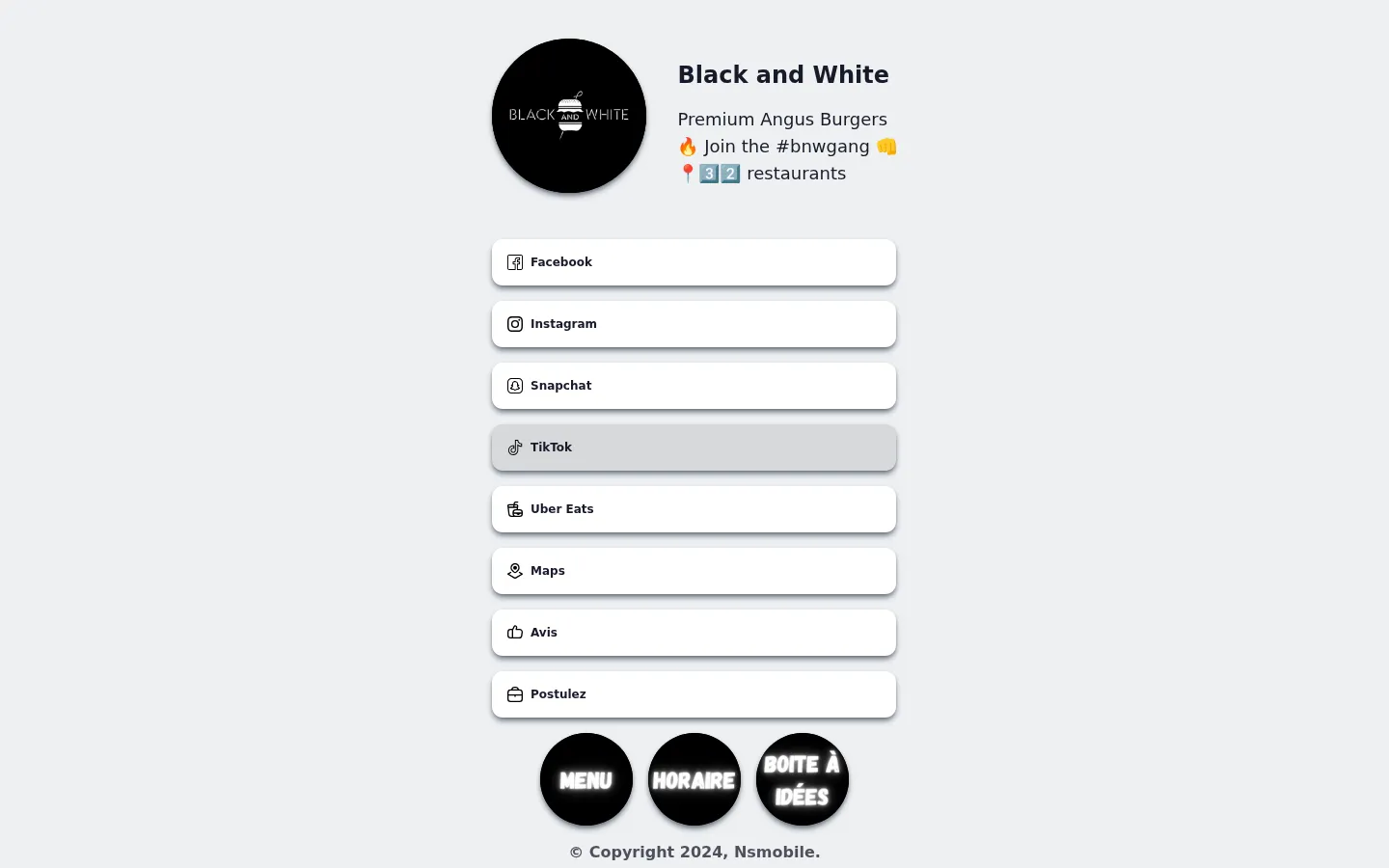
Carder is a multi-tenant SaaS for NFC business cards, deployed under nsmobile6k.be and techcard.be. Each client gets a fully customised /users/[slug] page — logo, colours, links, badges — accessible with a single tap on any NFC-enabled smartphone.
Architecture
Built with Astro 5 SSR on the standalone Node.js adapter. Persistence is Astro DB (hosted SQLite via libSQL), queried with Drizzle ORM. Interactive bits are React 19; the UI uses Tailwind + DaisyUI for base theming and inline CSS variables for per-card colours. Mutations go through Astro Actions rather than ad-hoc API routes — type-safe end to end and validated by Zod.
Node.js (entry.mjs)
    │
    └── Astro SSR runtime
            ├── Public pages       /users/[slug], /users/[slug]/badges/[id]
            ├── User dashboard     /cards, /cards/[slug]/edit, /profile
            ├── Admin panel        /admin/cards, /admin/access
            └── Astro Actions      CRUD for cards, links, badges, auth
Sessions use Astro’s experimental fs-lite driver, persisted in a dedicated Docker volume.
Product range
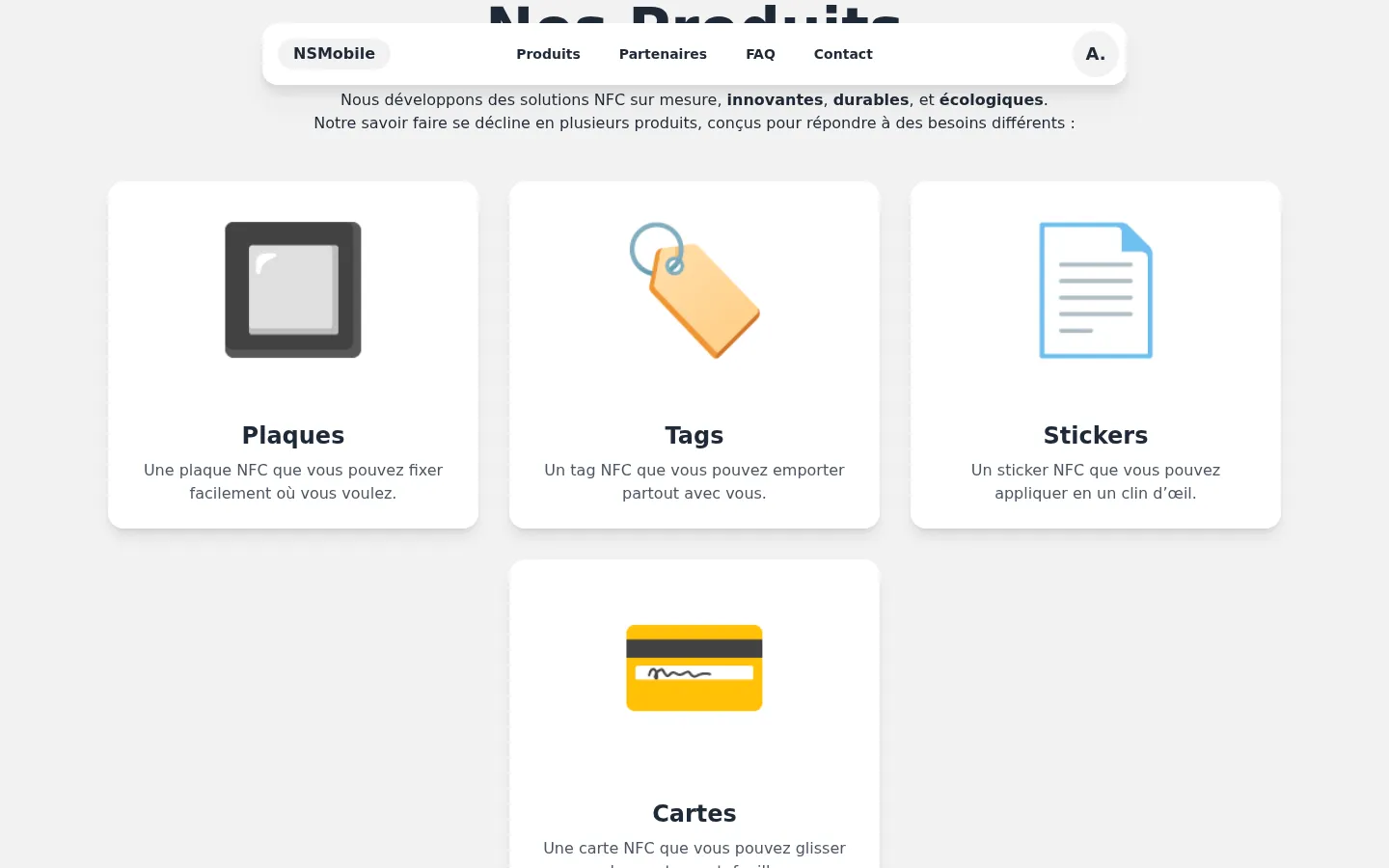
The customer-facing landing markets four physical NFC supports — plaques, tags, stickers and cards — all backed by the same card record on the platform.
Admin panel
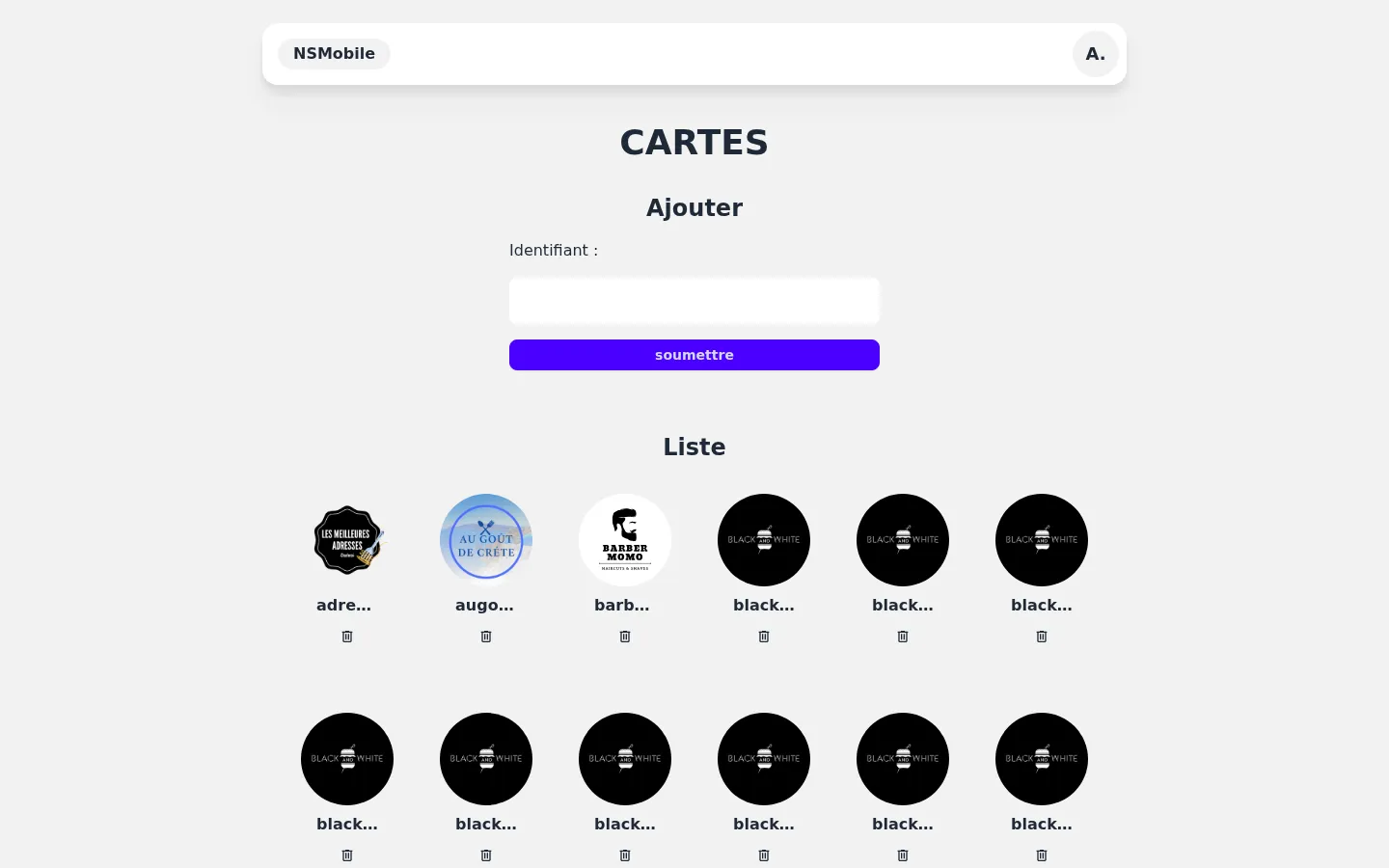
Admins create card slugs, manage assets and prune the catalogue from a single dashboard. Each card has its own /cards/[slug]/edit form where the client (or the agency on their behalf) configures everything below.
Per-card customisation
Each card exposes a set of configurable properties:
- Colours — card background, text, logo background, link colours: all injected as inline styles for accurate per-client rendering without global CSS overrides.
- DaisyUI theme — applied via
data-themefor per-client light/dark mode. - Border radius —
roundedorsquarestyle driven by thethemefield.
Link system
A card can display up to 8 links in a 2-column grid. Each link has one of 20+ types — phone, WhatsApp, Instagram, TikTok, Google Maps, Google reviews, menus, online ordering, calendar, forms, and more. The size property (small / large) controls whether the link spans 1 or 2 columns.
Badges
Badges are visual buttons tied to an image or logo, with an optional URL or a dedicated sub-page at /users/[slug]/badges/[id]. Clients use them to showcase certifications, current promotions, menus or rich media content directly on the card.
Installable PWA
Each card page dynamically generates an inline Web App Manifest — id, start_url, scope, theme colours and icons are all computed from the card’s database record. End users add the card to their home screen without going through any app store; the page launches in fullscreen mode with no browser chrome, which keeps the experience indistinguishable from a native app for repeat visits.
Cookieless analytics
Page views and clicks are tracked through an internal service (holmes.nsmobile.be). Every event — page load or link/badge click — fires a POST /api/hits/[slug]/[action]. No cookies, no third-party JavaScript, no consent banner needed.
Deployment
The application runs on Docker Compose behind a Caddy reverse proxy configured via container labels. Two volumes are mounted: data/ for sessions and the local SQLite database, and dist/client/assets/cards/ for card assets (logos, badges) persisted across image rebuilds.
Related work